TARMAC LAYING

Tarmac laying, done properly from the base up

We lay tarmac driveways and paths nationwide across England, from resurfacing to a full dig-out and rebuild. Every job starts with the ground, not the surface.

  • Driveways and footpaths
  • Resurfacing or full dig-out
  • Falls set for drainage
  • Free no-obligation quotes

FREE, NO-OBLIGATION QUOTE

Ask about tarmac laying

Prefer to talk? Call 01206 304660. See our privacy notice.

Family owned. Personally delivered.Own fleet and plant. No middlemen.Based in Essex. Working nationwide across England.

01 / OVERVIEW

Tarmac laying for driveways and paths

Most of our tarmac laying work is driveways and footpaths, for homeowners and new-build developments. A tarmac driveway gives a smooth, hard-wearing surface for daily car use, and it's usually quicker to install than block paving.

We also lay tarmac paths through gardens and commercial grounds, tying in neatly with existing paving and kerbs so the finished job looks deliberate rather than patched in.

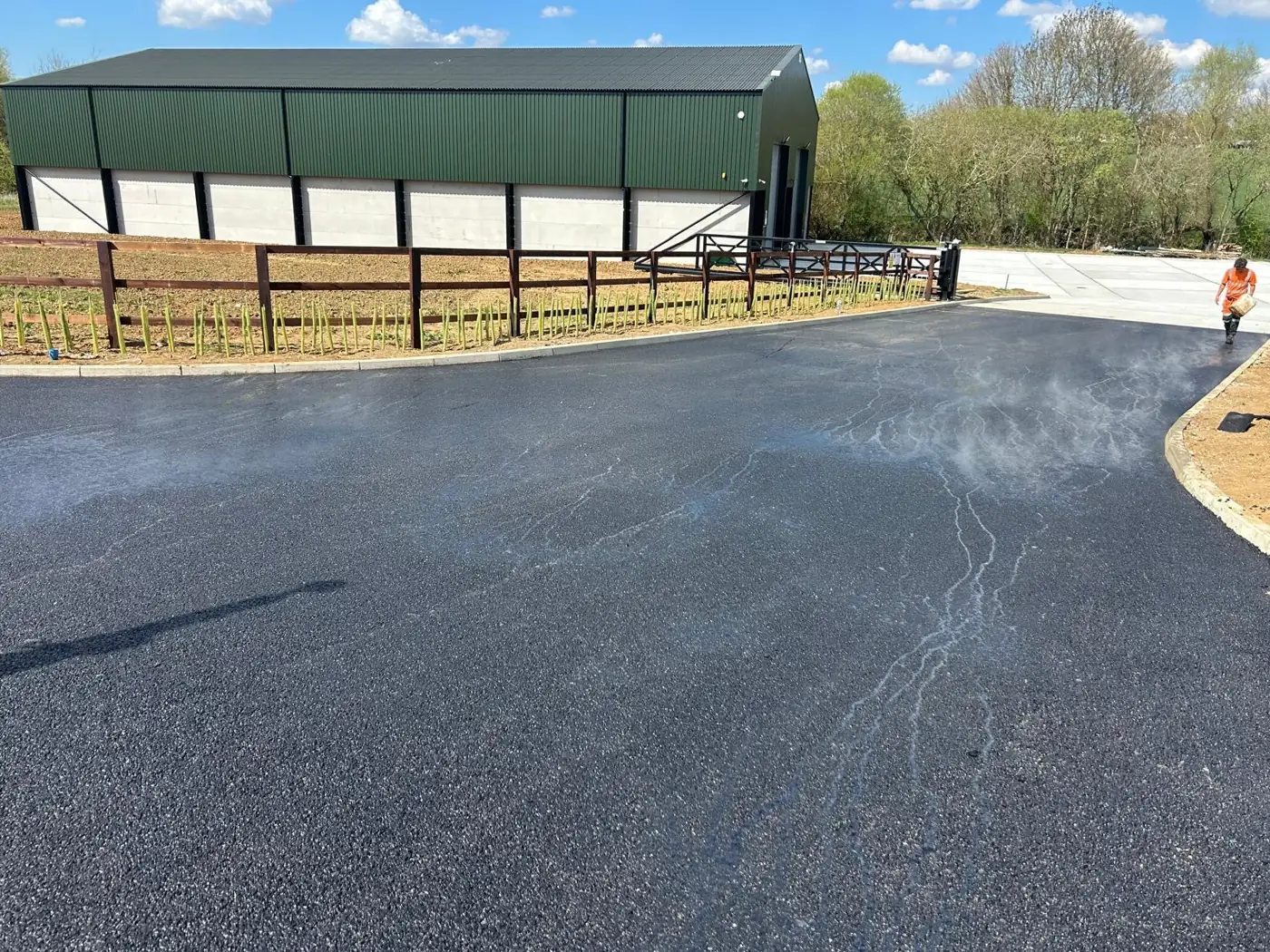
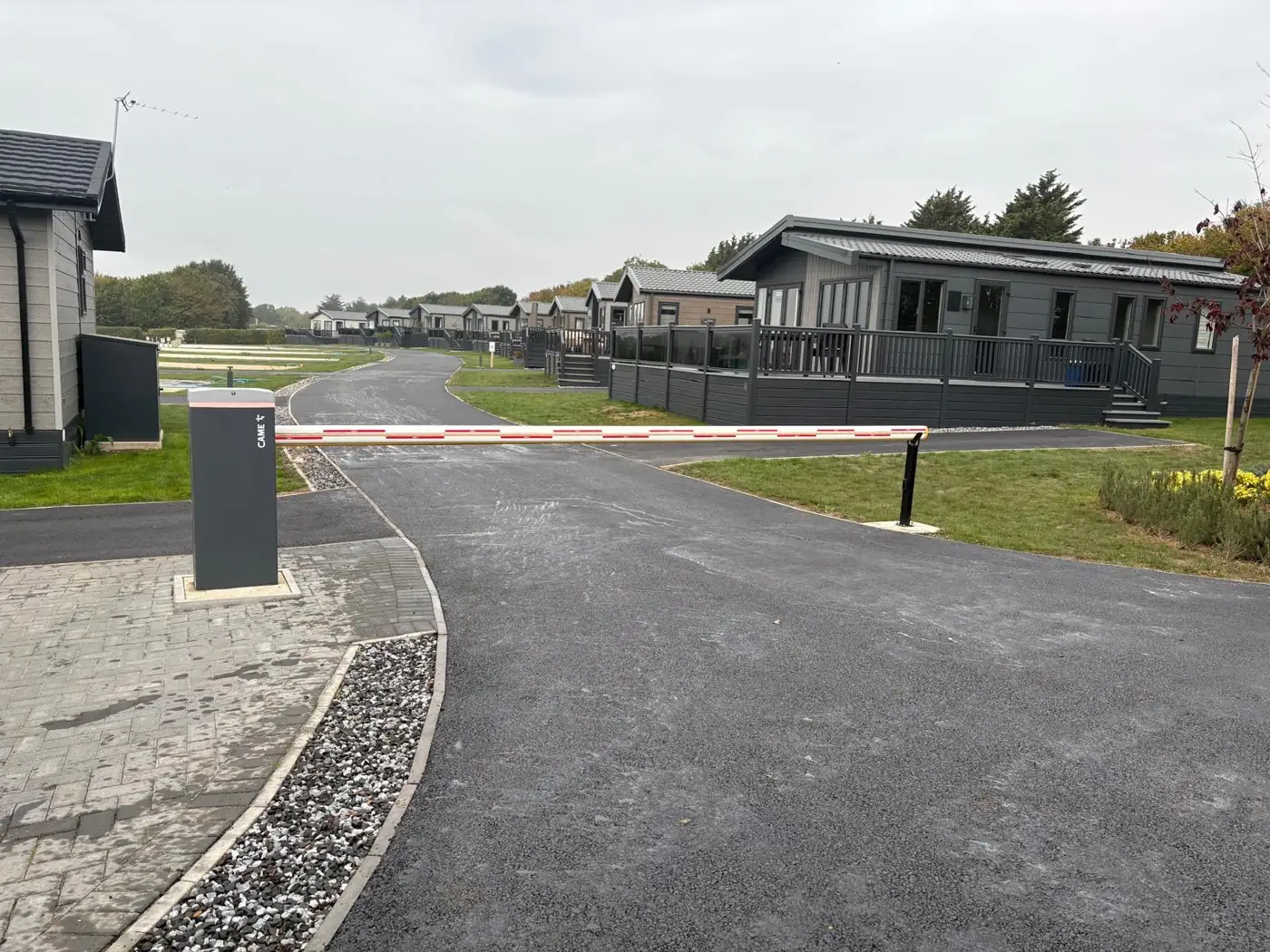
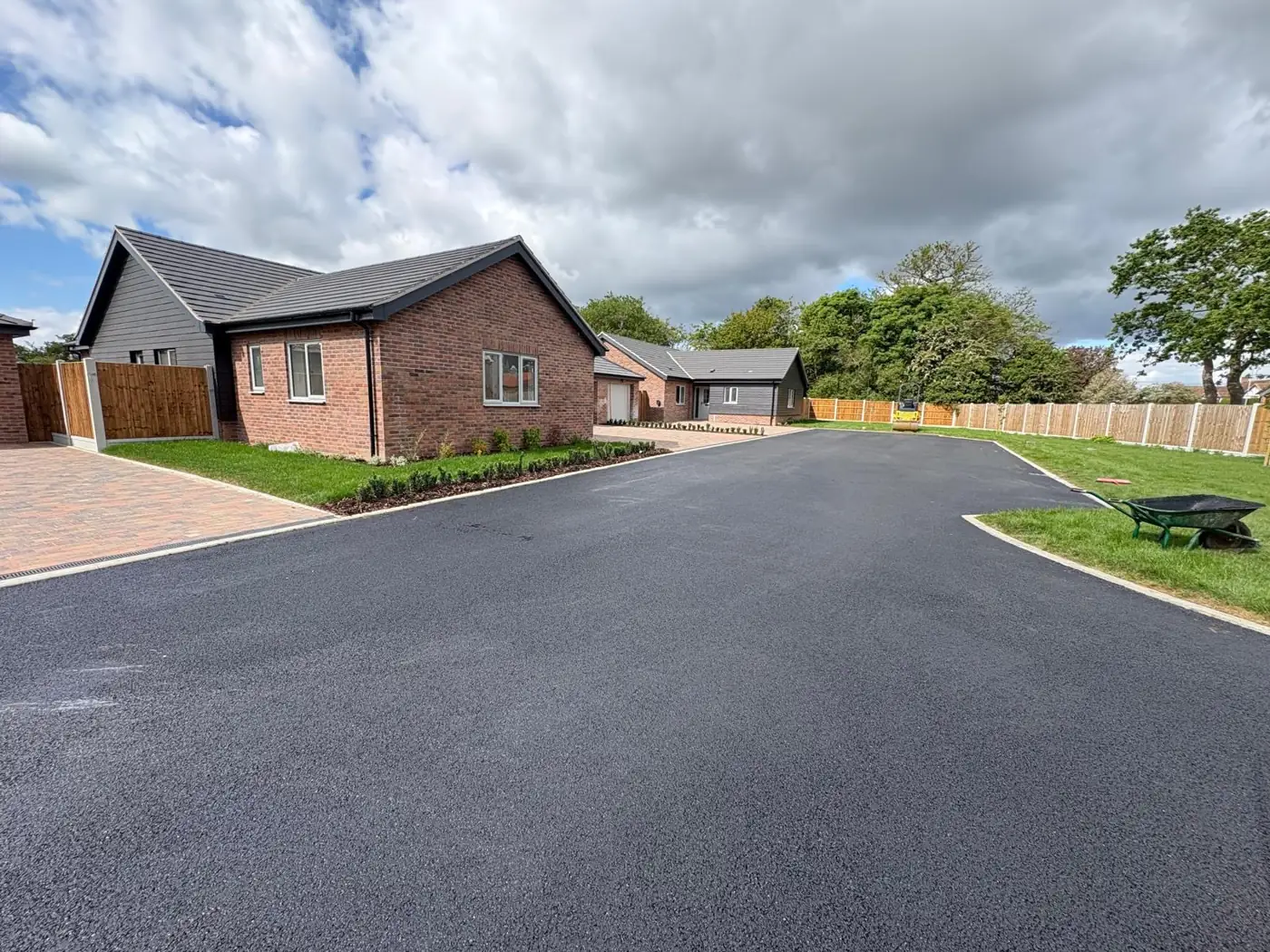
Finished tarmac driveway outside a houseTARMAC LAYING
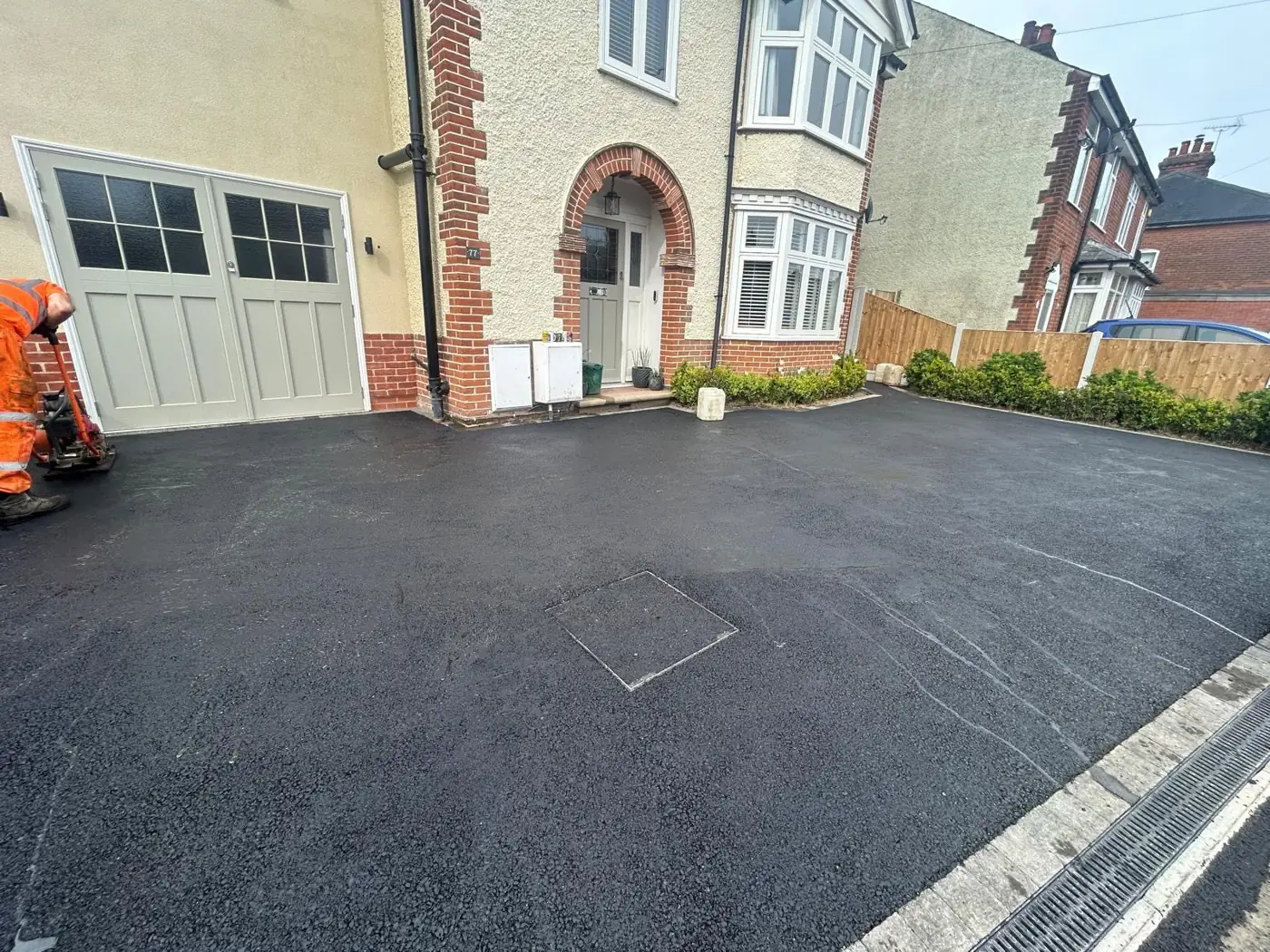
Driveway part way through resurfacing work

02 / TARMAC LAYING

Resurfacing over an existing surface or starting again

If your current tarmac or paving is worn but the base underneath is sound, we can often resurface over the top. This means laying a fresh course of tarmac onto the existing surface, which keeps disruption down while giving you a like-new finish.

Where the base has broken up or holds water, resurfacing on top won't last. In that case we dig out the old surface and sub-base, then rebuild from the ground up. We'll tell you plainly which option your driveway needs, rather than quoting the cheaper job if it won't hold up.

03 / IN DETAIL

Tarmac laying, done properly

What goes into the job, and what to expect from us.

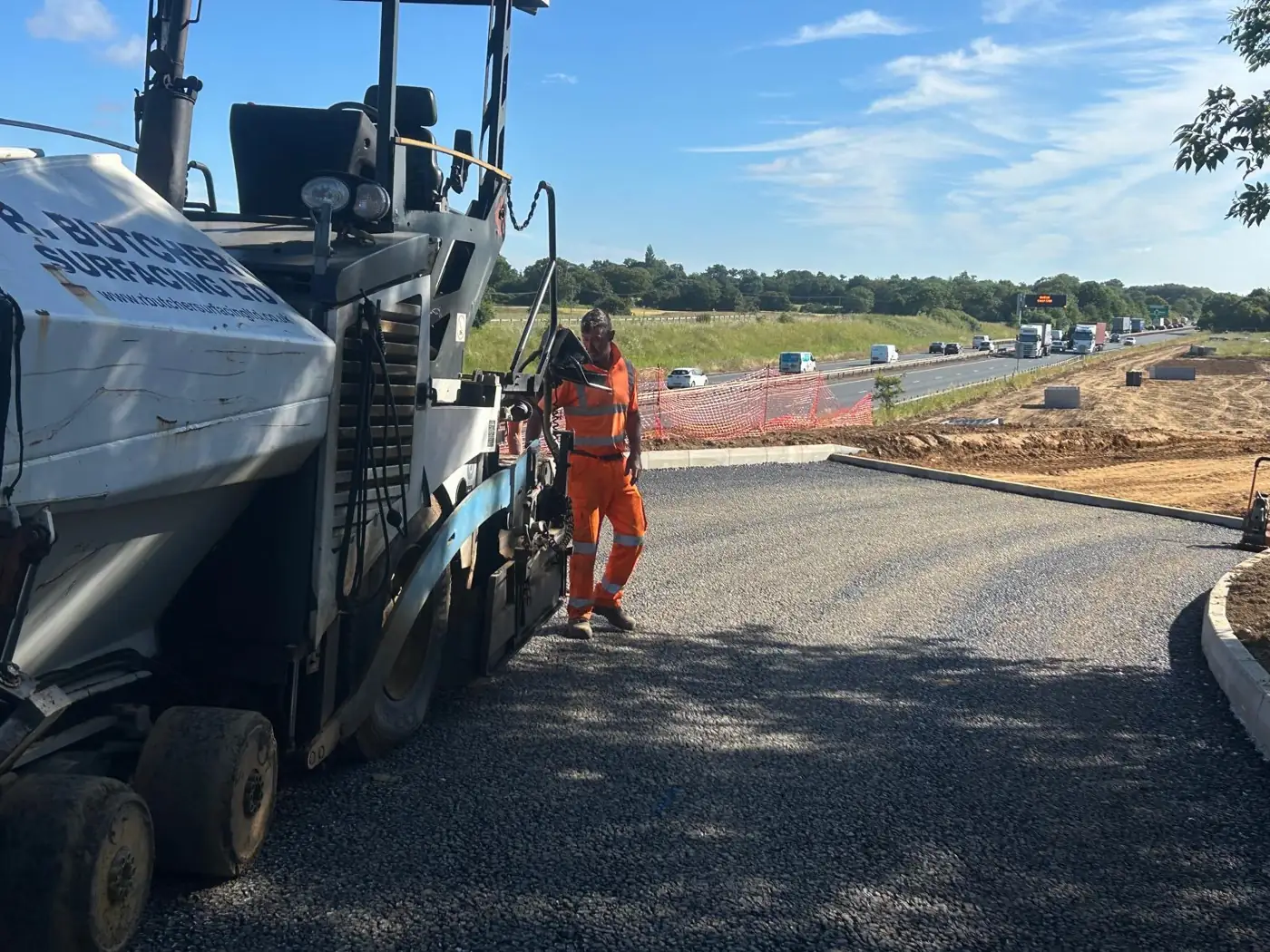
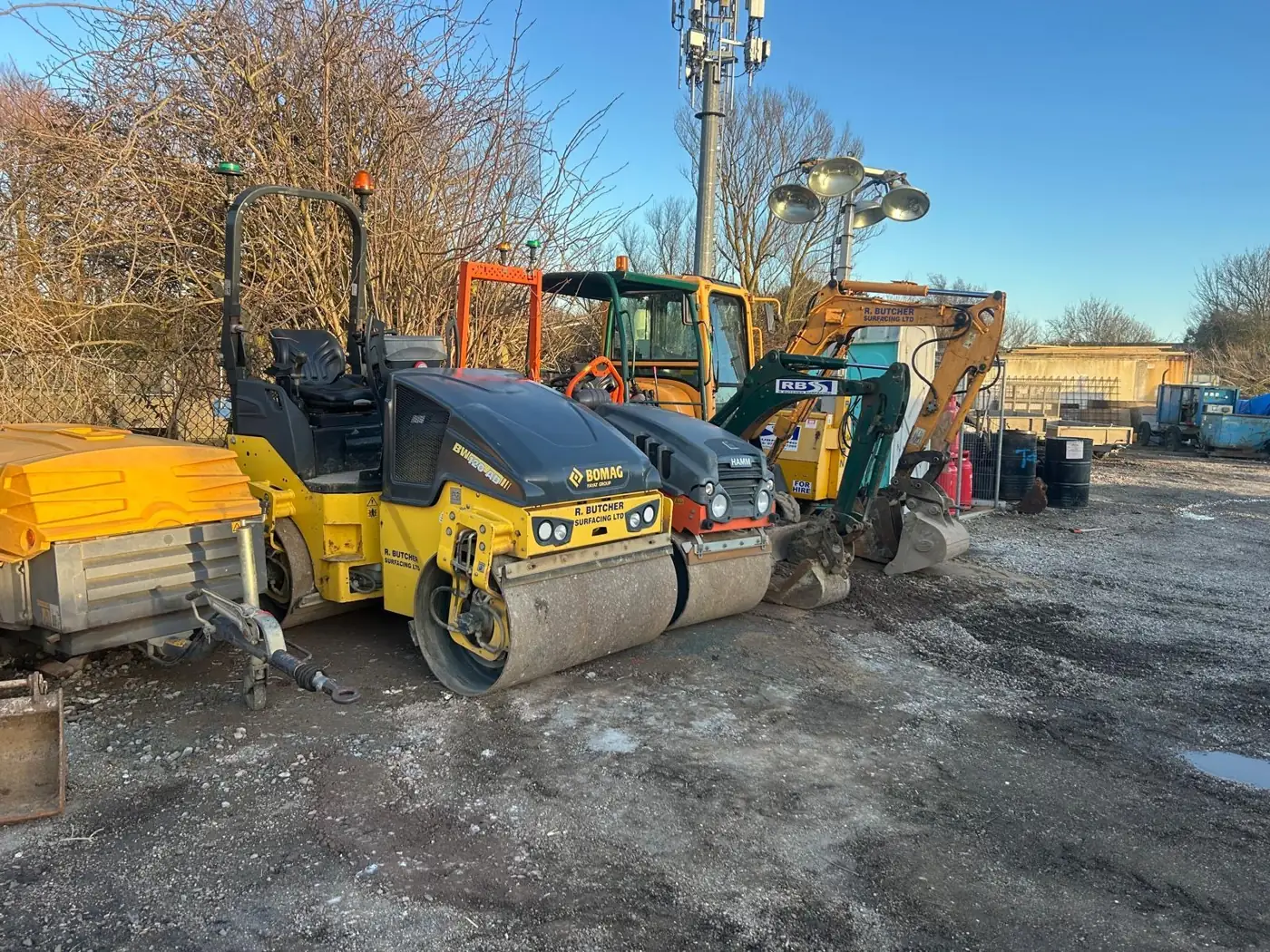
Roller compacting newly laid tarmac01

Sub-base, laying and rolling

A tarmac surface is only as good as what's underneath it. We excavate to the right depth, compact a sub-base of crushed stone to take the expected traffic, and check falls before any tarmac goes down.

Tarmac is delivered hot and has to be laid and compacted while it's still workable, so timing matters. We lay it to the planned thickness and roll it in passes to bind the material into a dense, even surface. Edges are finished neatly against kerbs or paving so there's no loose material left to break away.
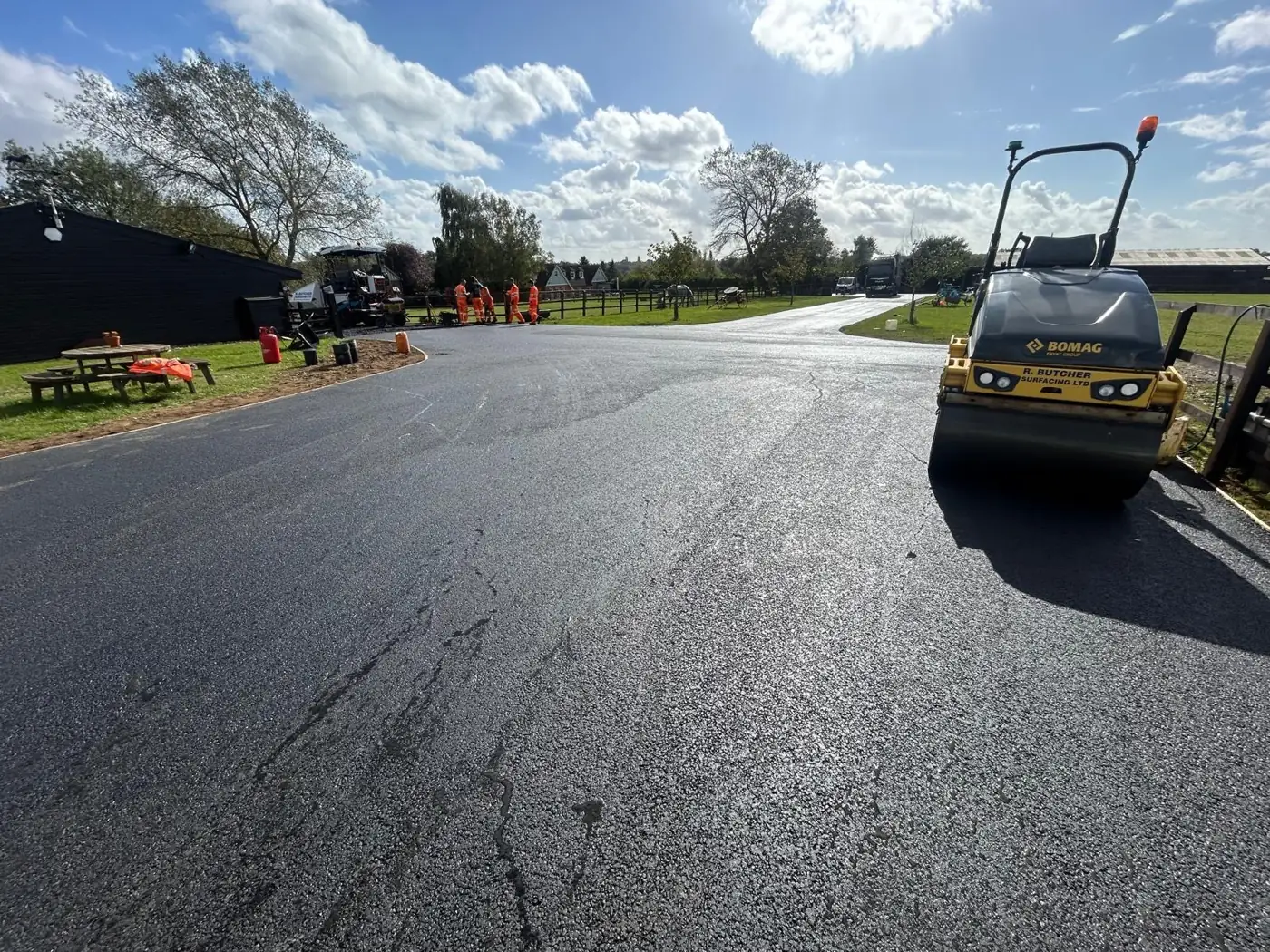
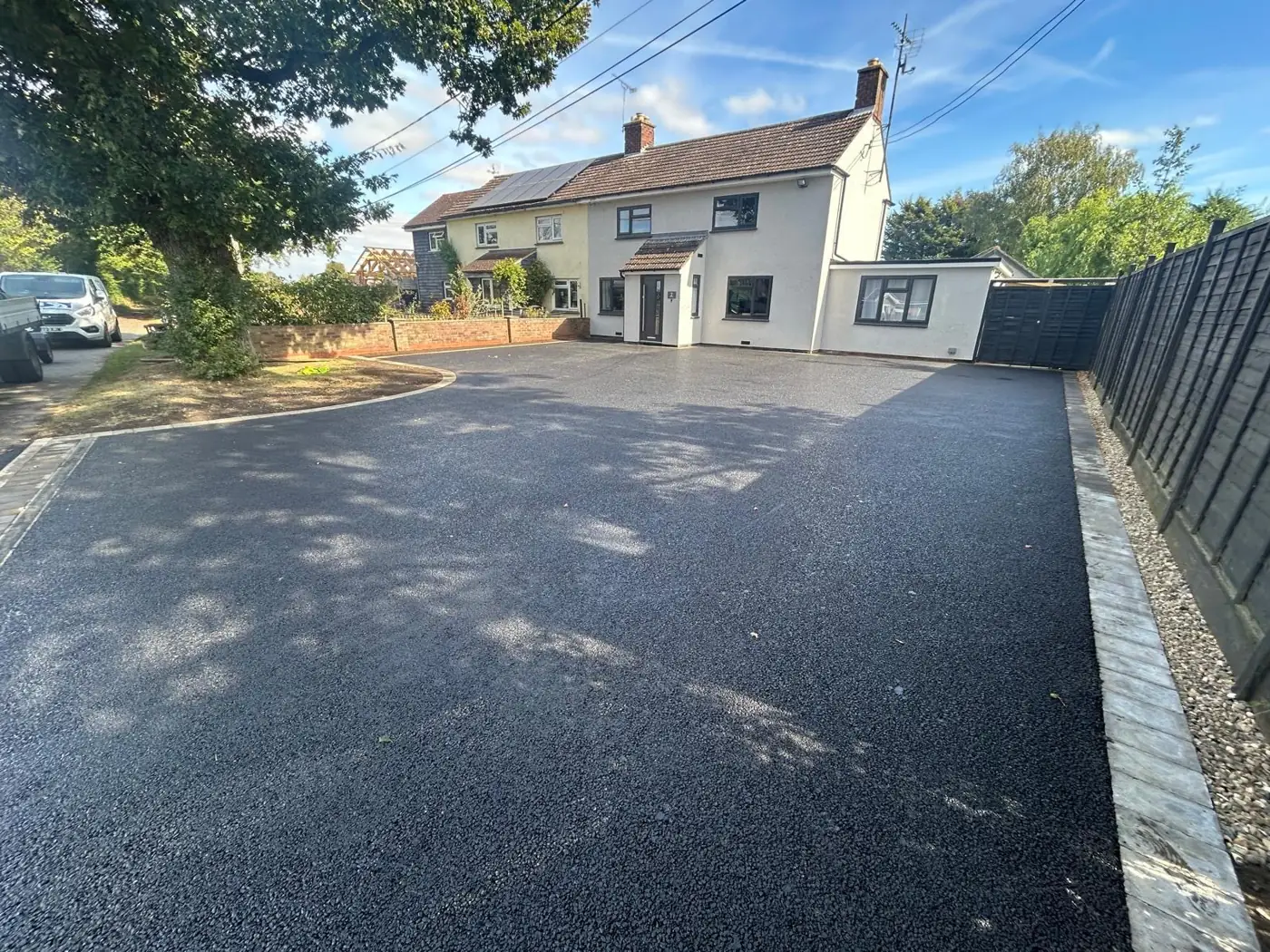
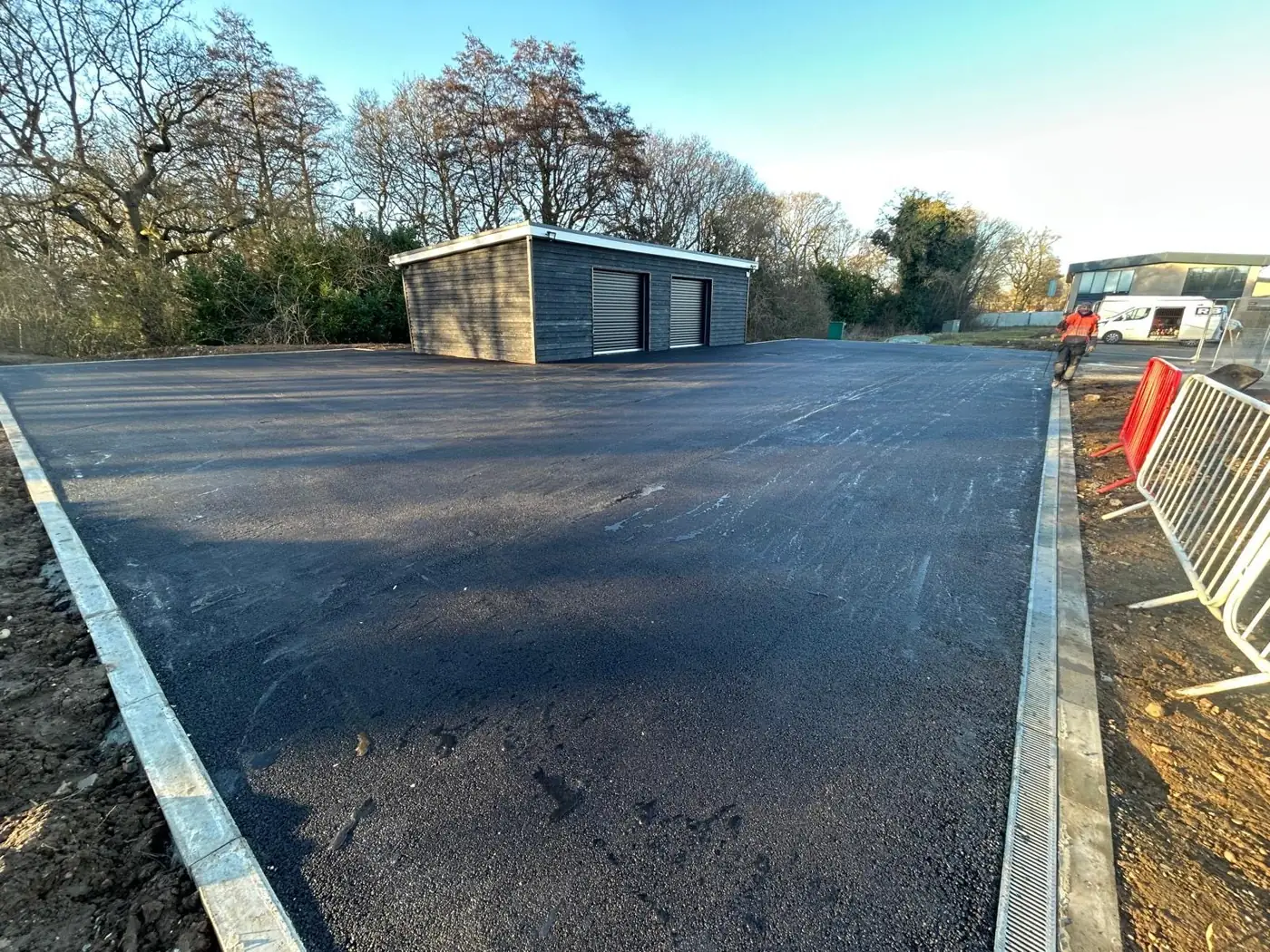
Newly laid road surface with kerb edging02

Edging and drainage falls

Every driveway or path we lay has a fall built in, usually directing water towards a drain, soakaway or a boundary where it can disperse safely. Getting this right at the design stage stops puddling and water running towards your house.

In England, a new or replacement front driveway over 5 square metres that's impermeable and drains onto the road normally needs planning permission, unless water is directed to a permeable area or a soakaway on your own land. We'll talk you through what applies before work starts.

Driveway03

Looking after a new tarmac surface

Tarmac takes time to fully harden, so treat a new surface gently for the first few weeks. Avoid parking in exactly the same spot every day, and try not to turn the steering wheel while the car is stationary on hot tarmac, as this can scuff the surface while it's still soft.

Heavy point loads, such as a caravan jack or a skip resting directly on the surface, can also leave marks in warm weather. Once fully cured, tarmac copes well with normal daily use.

FAQS

Frequently asked questions

01

How long does a tarmac driveway take to lay?

A typical domestic driveway takes one to a few days depending on size and whether it needs a full dig-out and new sub-base, or just resurfacing. We'll give you a time frame specific to your job once we've seen the site.

02

How long does tarmac last?

A well-built tarmac driveway, laid on a proper sub-base with good drainage, can last many years with normal use. Lifespan depends on ground conditions and traffic, which is why getting the sub-base and falls right matters more than the surface itself.

03

Do I need planning permission to lay a new driveway?

Often not, but a new or replacement front driveway over 5 square metres that's impermeable and drains onto the road usually needs planning permission in England, unless water drains to a permeable area or soakaway.

04

Can you resurface over my existing driveway?

Often yes, if the base underneath is sound and just the surface has worn. We check the existing driveway first. If the base has broken up or holds water, resurfacing on top won't last, and we'll recommend a dig-out instead.

05

How soon can I park on a new tarmac driveway?

New tarmac needs time to harden. In the first weeks, avoid parking in exactly the same spot repeatedly and try not to turn your wheels while stationary on the surface, especially in hot weather.

Get your tarmac laying quote

Tell us about your driveway, path or resurfacing job and we'll arrange a convenient time to visit and discuss a free, no-obligation quote.